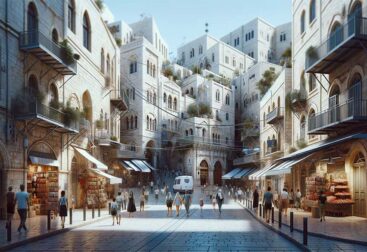
Mahane Yehuda is often described as one of Jerusalem’s essential stops, yet that description is still too simple. The market is not just a place to buy food or try local dishes. It behaves differently across the day. In the morning and early afternoon, it works as a living market where produce, bread, spices, olives, and everyday shopping shape the rhythm. Later, especially toward evening, the same area shifts into a food-and-nightlife district with bars, restaurants, music, and a more social pace. Even the site you asked about presents Mahane Yehuda as both a practical city market and a place where visitors can feel the life of Jerusalem beyond monuments.
That is why a tourist can leave Mahane Yehuda with two very different impressions depending on the hour of arrival. A daytime visitor is likely to remember color, movement, noise, bargaining, and the feeling of a city feeding itself. An evening visitor is more likely to remember atmosphere, lighting, drinks, conversation, and the sense that the market has turned into an urban hangout. Both impressions are real. Both belong to the same place. The difference lies in what the market is doing at that moment.
Daytime Mahane Yehuda as a Working Market
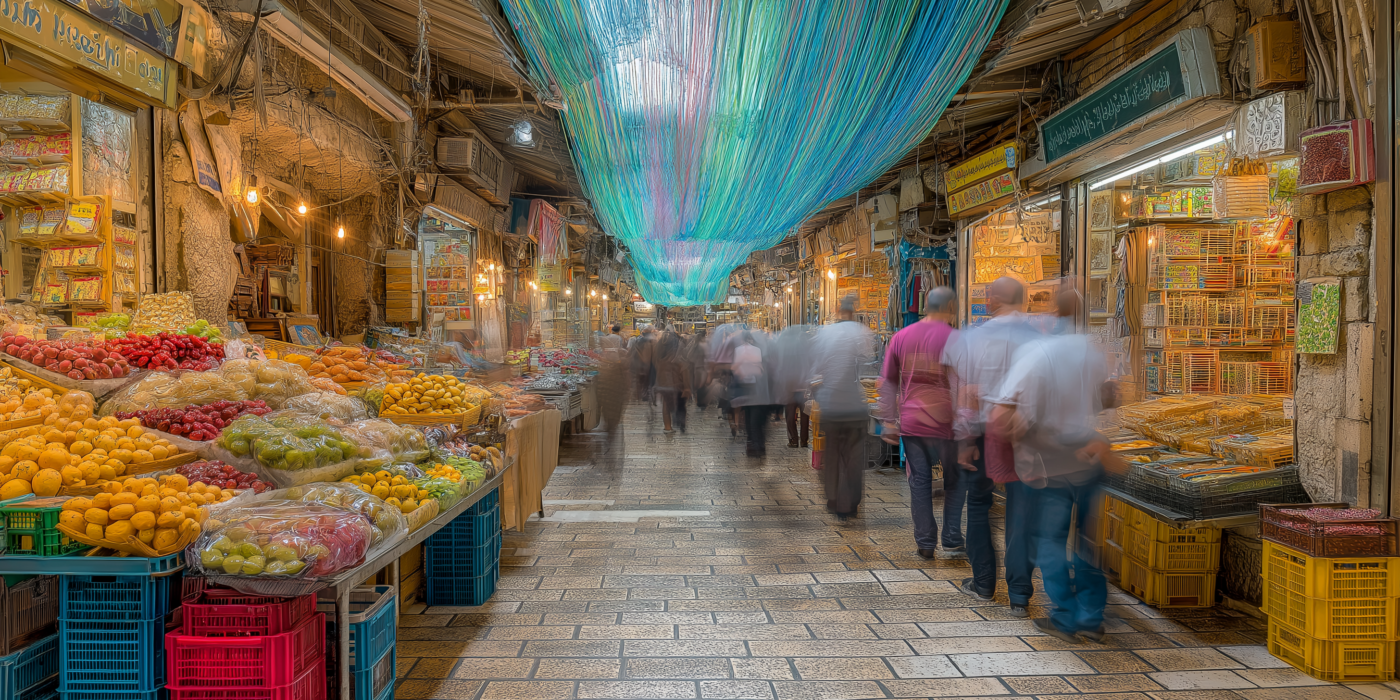
During the day, Mahane Yehuda feels closest to its original identity. The official market site describes it as a bustling marketplace that has remained authentic despite tourism, and the travel material on jerusalembookfair.com emphasizes ripe fruit, dates, olives, ceramics, hummus, juice, and the fact that you can see many different kinds of Jerusalem residents there. That matters for a visitor. In daylight, the market does not feel staged for tourists alone. It feels like a functioning piece of the city.
This is the best time for travelers who want to understand Jerusalem through everyday behavior rather than through formal attractions. In the daytime shuk, the sensory side is immediate. You notice stacks of produce, spice displays, bread, sweets, and the fast rhythm of vendors serving regular customers. The market’s role is not only commercial. It also acts as a social cross-section, where locals and visitors overlap in the same narrow lanes. Jerusalembookfair.com specifically points to that human mix as one of the market’s strongest qualities.
For many tourists, this daytime version is the more revealing one. Jerusalem can easily be experienced through sacred sites, museums, and panoramic viewpoints. Mahane Yehuda during market hours offers something different. It shows the city in practical motion. People are buying ingredients, meeting briefly, moving with purpose, and passing through on ordinary routines. That creates a less polished, more useful kind of travel memory. Instead of seeing Jerusalem only as a place of history, the visitor sees it as a place where daily life keeps moving.
The daytime market is also better for slow observation. A traveler can stop at a juice stand, sample sweets, compare bread stalls, or simply watch how the pace changes across the aisles. Guided food-tour pages stress the range of flavors and merchants that define the market, and that sensory density is part of why daytime visits feel so rich. The crowd is not there only to be entertained. It is there to shop, eat, and continue the day. That gives the experience a grounded character.
Evening Mahane Yehuda as a Social and Nightlife Space
After dark, Mahane Yehuda becomes something else. Several travel sources describe a clear transformation: stalls close, shutters come down, and the area turns into a lively nightlife zone with bars, food, drinks, music, and evening tours built around that shift. One source puts it plainly by saying that “the day market is nothing like the night market,” while others describe it as a major night spot once the produce vendors finish for the day.
For a tourist, this means the emotional center of the visit changes. In the daytime, attention is spread across ingredients, vendors, colors, and local routine. At night, attention gathers around mood. The same lanes start to feel more performative and more urban in a nightlife sense. Lighting matters more. Music matters more. The experience becomes less about the market as infrastructure and more about the market as a place to stay, talk, drink, and continue the evening.
This is not a small adjustment. It changes the social position of the visitor. In the day, a tourist is often a watcher moving through a working environment. At night, the tourist becomes part of the scene. The market no longer reads mainly as a local service space. It reads as a destination. Evening tours and nightlife guides build directly on that identity, presenting Mahane Yehuda as one of the city’s liveliest after-dark areas.
There is also a visual shift that many visitors remember strongly. Evening materials highlight the shutters, street art, pubs, and more theatrical character of the area after trading hours. This helps explain why some travelers prefer coming twice. A single visit can only show one version of the market. Daylight reveals authenticity through routine. Evening reveals personality through atmosphere. Seen together, the two visits make more sense than either one alone.
Why the Same Place Feels So Different
What makes Mahane Yehuda unusual is not only that it is lively. Many markets are lively. What makes it distinctive is the strength of its time-based identity change. The official site says the market intertwines food, drinks, shopping, bars, and restaurants. That wording matters because it suggests the place was never reduced to one single function. Still, the contrast between working market and nightlife district is strong enough that tourists often experience it as two separate urban worlds sharing one physical setting.
This split gives the traveler two different ways to read Jerusalem. By day, Mahane Yehuda belongs to the city’s practical life. By night, it belongs to the city’s social imagination. One version helps a visitor understand local rhythm. The other helps a visitor feel contemporary urban energy outside the Old City’s historical frame. That is why the market fits so well on a site like jerusalembookfair.com, which already treats Jerusalem not only as a sacred destination, but also as a place of neighborhoods, streets, food, and ordinary movement.
For some tourists, the daytime visit will be the more meaningful one because it feels less filtered and more rooted in daily life. For others, the evening version will feel more memorable because it offers stronger atmosphere and easier participation. Neither is the “correct” way to see the market. They simply answer different travel desires. One suits curiosity about how the city functions. The other suits curiosity about how the city gathers after work.
In practical terms, that means Mahane Yehuda rewards intention. Travelers interested in food culture, local rhythm, and observation should lean toward morning or midday. Travelers interested in nightlife, social energy, and a more event-like mood should return after dark. The strongest approach is often to do both. That is when the market becomes more than a stop on an itinerary. It becomes a lesson in how one urban space can hold two different identities without losing either of them.
Mahane Yehuda is therefore not just another market to tick off in Jerusalem. It is one of the clearest places in the city where time of day changes the meaning of the experience. In daylight, it offers access to the city’s working pulse. In the evening, it opens into leisure, conversation, and nightlife. For the tourist, that dual nature is the real attraction. It turns one destination into two distinct encounters with Jerusalem itself.